London's Oldest Pubs, Actually Dated
Ten old London pubs with the date on the sign checked against the building behind it — one Grade I coaching inn, one invented 1520, and the city's most repeated pub legend traced to a dinner in 1892.
Almost every date painted on a London pub is a claim about the ground, not about the building standing on it. "Established 1602" usually means someone was licensed to sell beer on this spot in 1602, and says nothing about the walls, which are generally a century younger and sometimes three. Once you separate those two questions — how long has there been a pub here, and how old is the room I am in — the famous league table of oldest pubs falls apart and a more interesting one replaces it.
Two things make the sorting possible. Historic England's listing gives a dated, argued assessment of the fabric, which is why it so often contradicts the pub's own website. And CAMRA's National Inventory of Historic Pub Interiors records interiors that genuinely survive rather than ones decorated to look as though they do — a much harder list to get onto, and conspicuous for who is missing from it.
On that basis the honest answer is the George Inn in Southwark, and it is not close. An inn is on the site in a map of 1542; the building is the 1677 rebuild after the fire that took most of the borough; it is Grade I listed, the only one here with that grade, and it is the last galleried coaching inn left in a city that once had dozens. Both halves of the claim check out, which is rare. Ye Olde Cheshire Cheese, the Olde Wine Shades and the Spaniards are the other three where the advertised date and the fabric broadly agree — 1667, 1663 and the sixteenth century respectively. The Hoop and Grapes inverts it: Grade II*, the second-highest grade here, awarded for a leaning late-seventeenth-century timber house of a type Historic England calls once common and now very rare — listed for the building rather than the pub.
Then the gaps. The Seven Stars has 1602 on the frontage and 1680s walls. Ye Olde Mitre dates itself to 1546 and stands in a building of about 1773 — down an alley that was legally administered as part of Cambridgeshire, where the Metropolitan Police had no authority at all. The Cittie of Yorke is the sharpest inversion: a licence running back to roughly 1430 inside a 1920s reconstruction. The Grapes gives 1583 over a structure from the 1720s, and its claim to be the tavern Dickens wrote into Our Mutual Friend has a rival a mile upriver that no document resolves.
Two legends are worth knowing as legends. The Prospect of Whitby advertises 1520 and the title of London's oldest riverside tavern; that date does not appear in print until the 1950s, and the pub is absent from CAMRA's inventory. What is documented is better anyway — it was the Devil's Tavern, it burned, and the 1777 rebuild took its name from a Whitby-built collier moored alongside. And Ye Olde Cheshire Cheese sells Samuel Johnson hard, though no record places him inside it. That association traces to a Johnson Club supper on 13 December 1892, where a former MP observed that Johnson, walking down Fleet Street, must have called in. It has been printed as fact ever since. His friends really did drink there, which nobody thought worth putting on the sign.
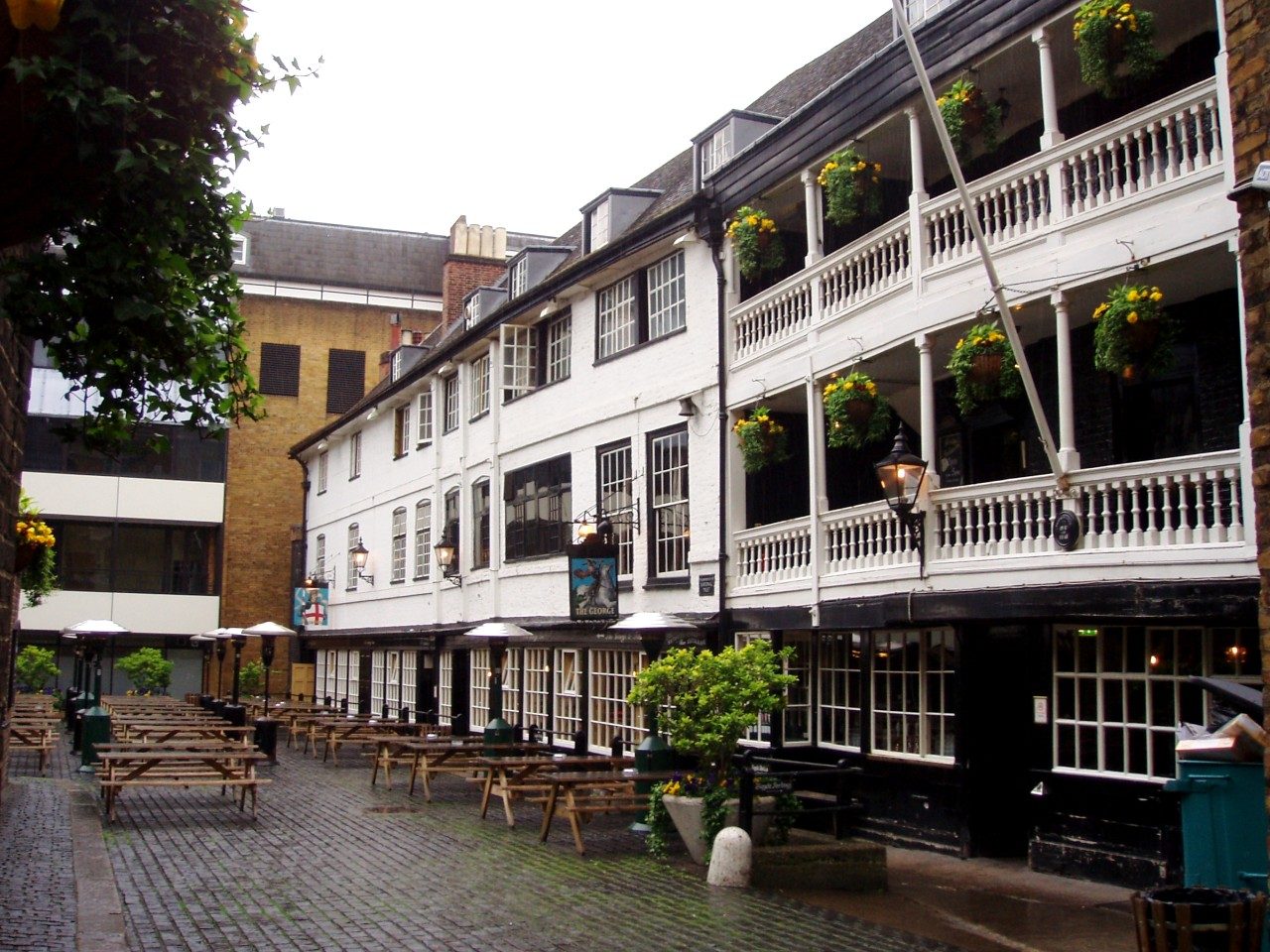
The George Inn
London, United KingdomThe closest thing to a straight answer on London's oldest pub: a 1677 rebuild on a site mapped in 1542, and the last galleried coaching inn in the city.
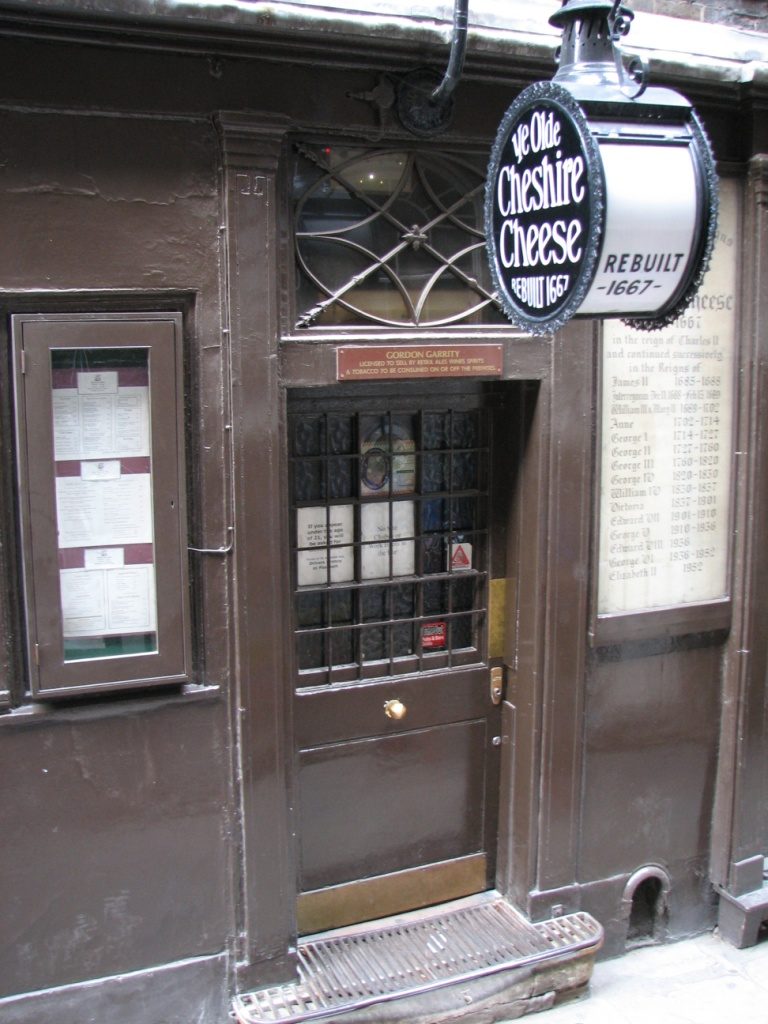
Ye Olde Cheshire Cheese
London, United KingdomRebuilt in 1667, the year after the Great Fire, and the birthplace of London's most durable invented pub legend.
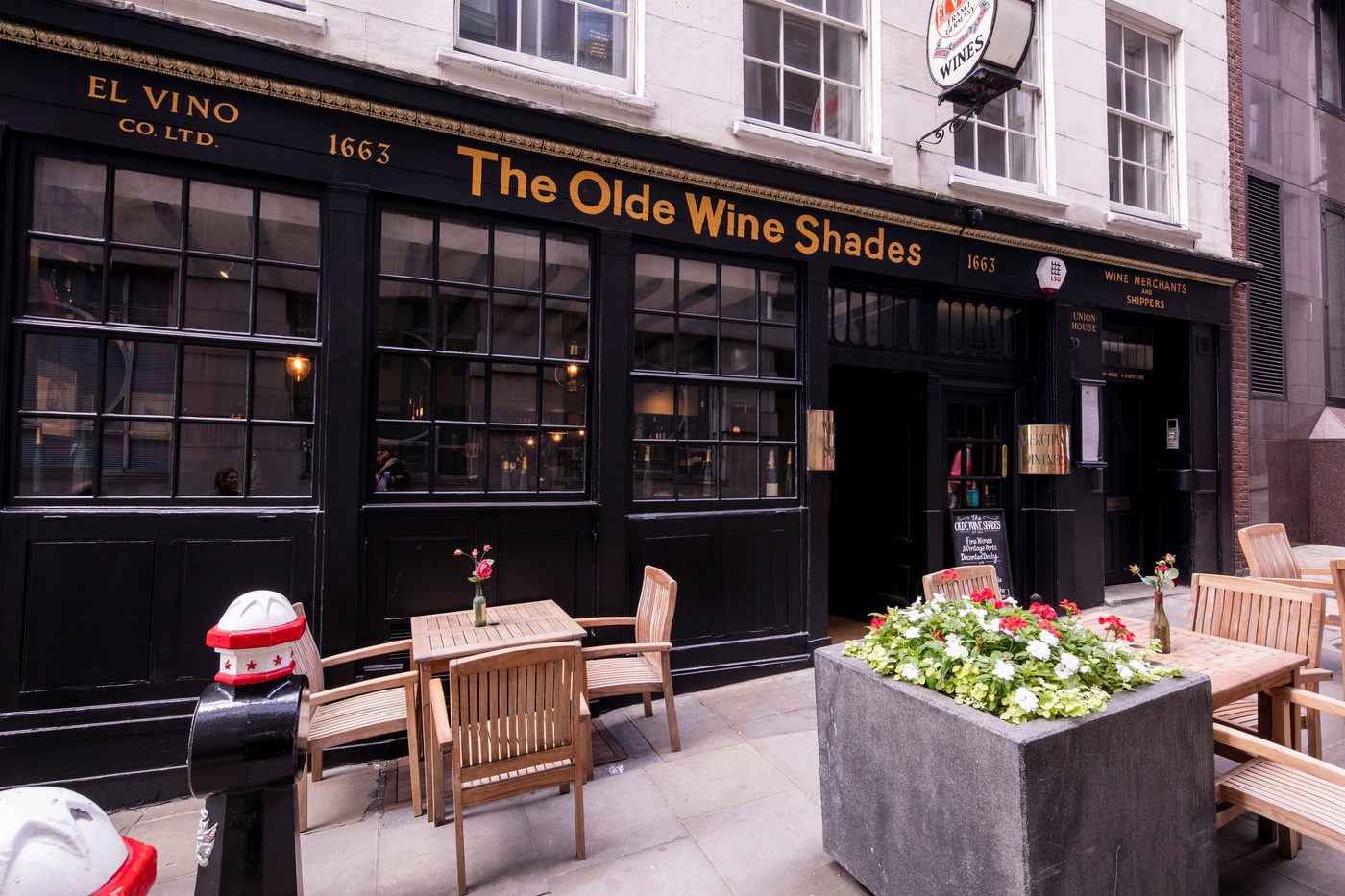
The Olde Wine Shades
London, United KingdomA 1663 merchant's house with a bricked-up river tunnel in the wall and the City's strongest claim to have outlived the Great Fire.
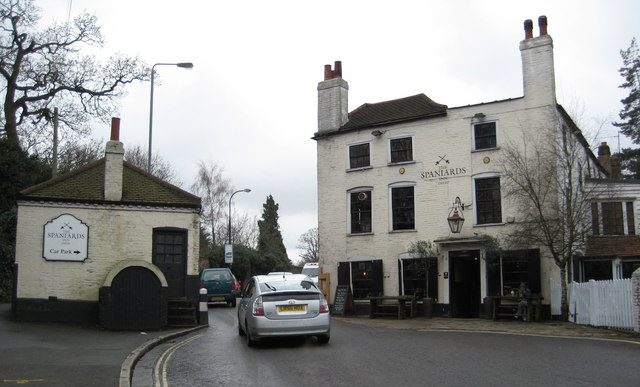
The Spaniards Inn
London, United KingdomA sixteenth-century inn on the edge of Hampstead Heath, with a surviving toll house opposite that still pinches the road to a single lane.
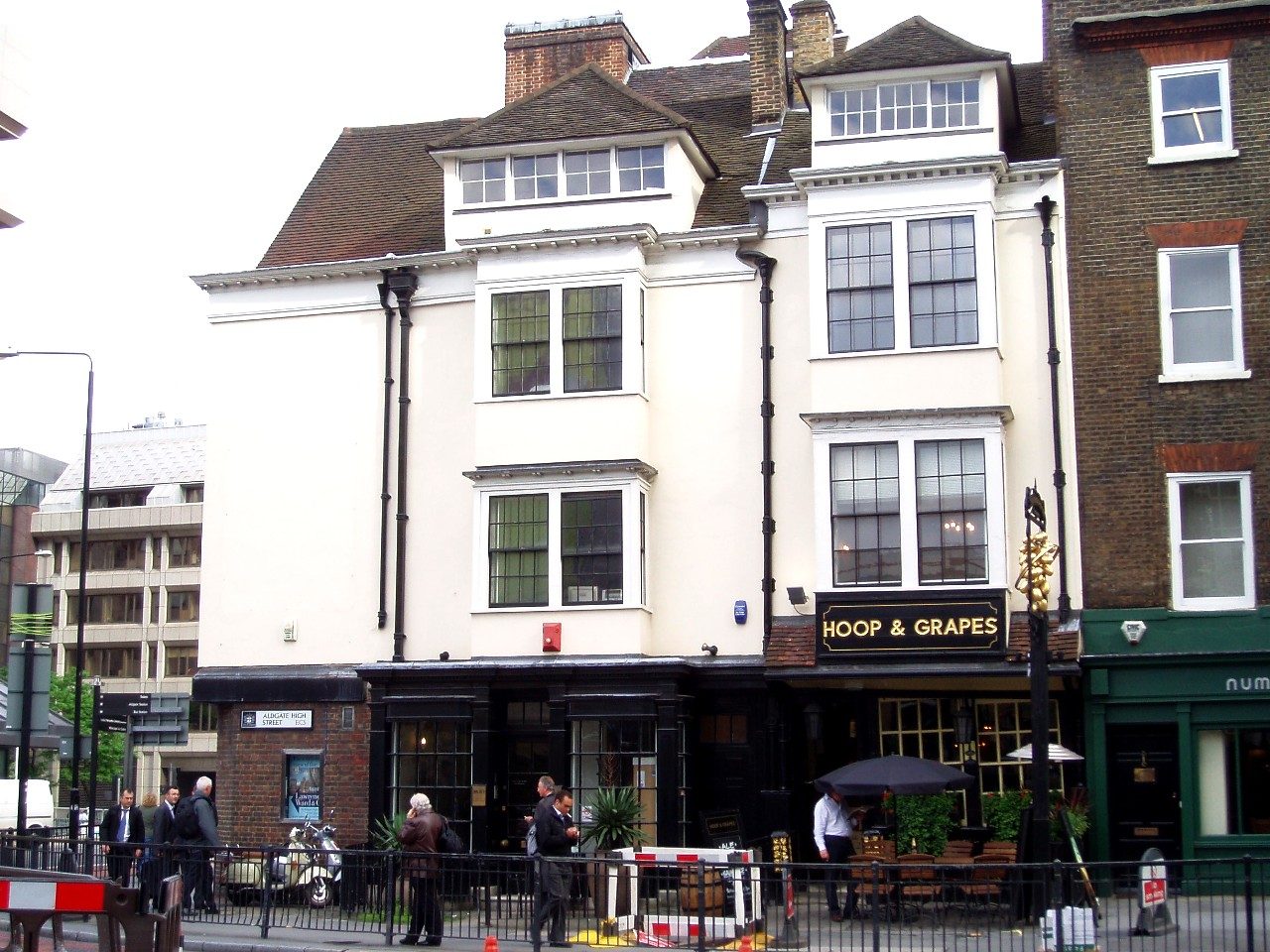
Hoop and Grapes
London, United KingdomA leaning late-seventeenth-century timber house that Historic England calls a type once common in London and now very rare.
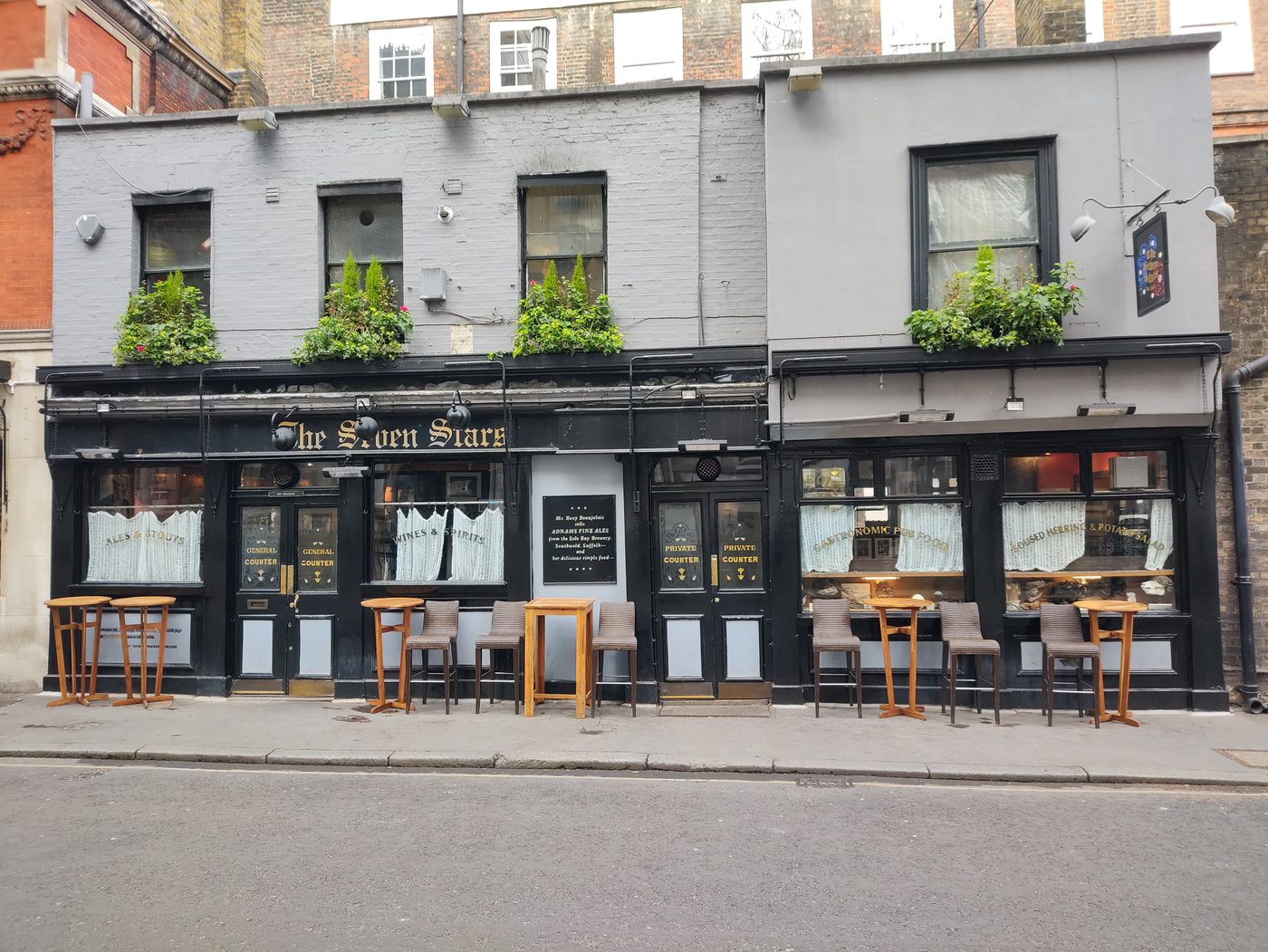
The Seven Stars
London, United KingdomThe frontage says 1602. The building is more like the 1680s — and the gap between those two numbers is the whole story of old London pubs.
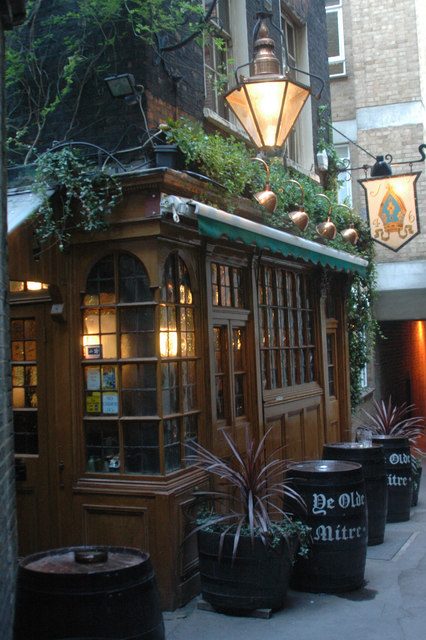
Ye Olde Mitre
London, United KingdomFounded in 1546 for a bishop's servants, housed in a building from about 1773, down an alley that was legally part of Cambridgeshire.
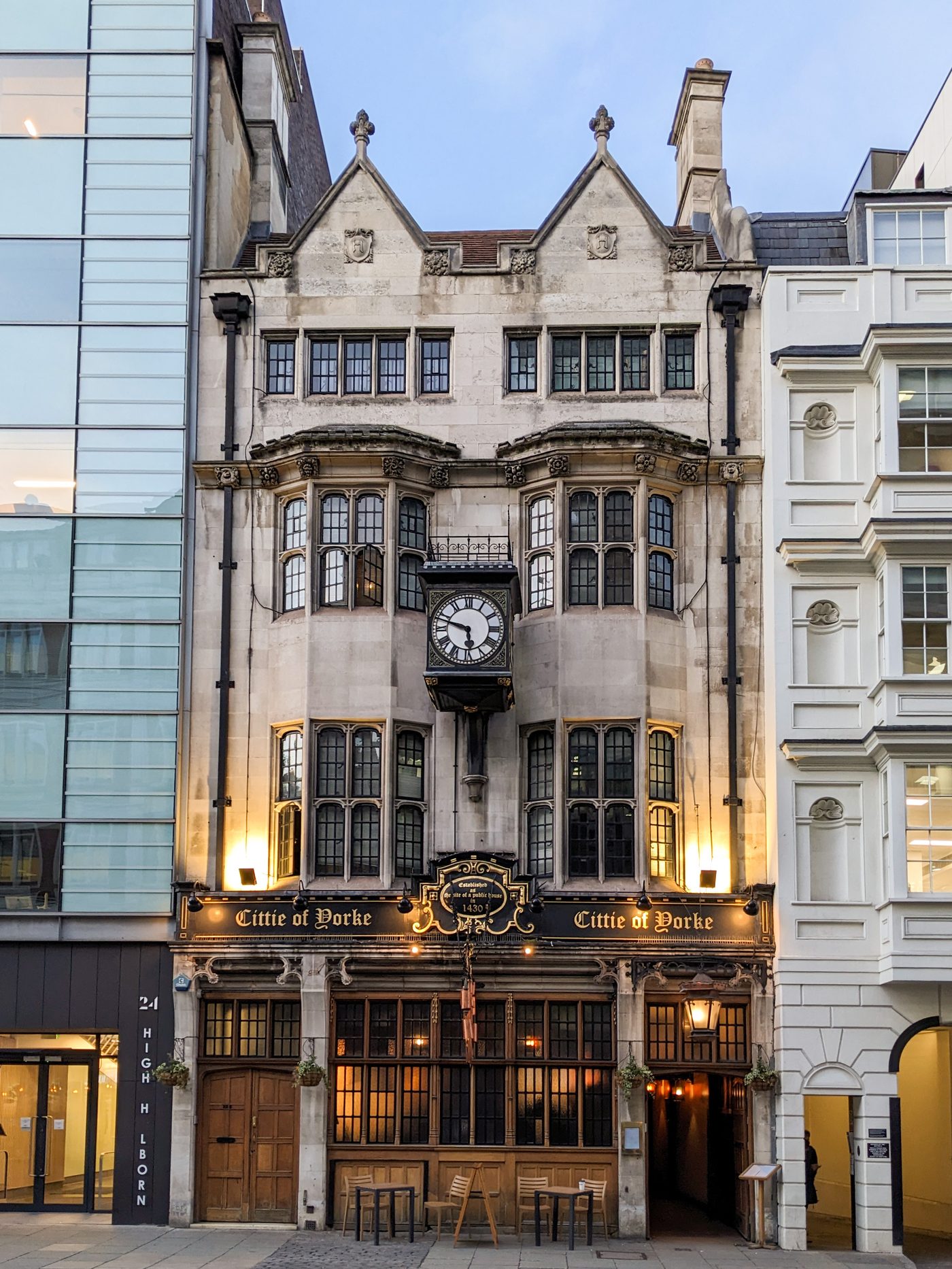
Cittie of Yorke
London, United KingdomA drinking house on this spot since about 1430, in a building from the 1920s — plus a Dylan Thomas poem that stayed lost for sixty years.
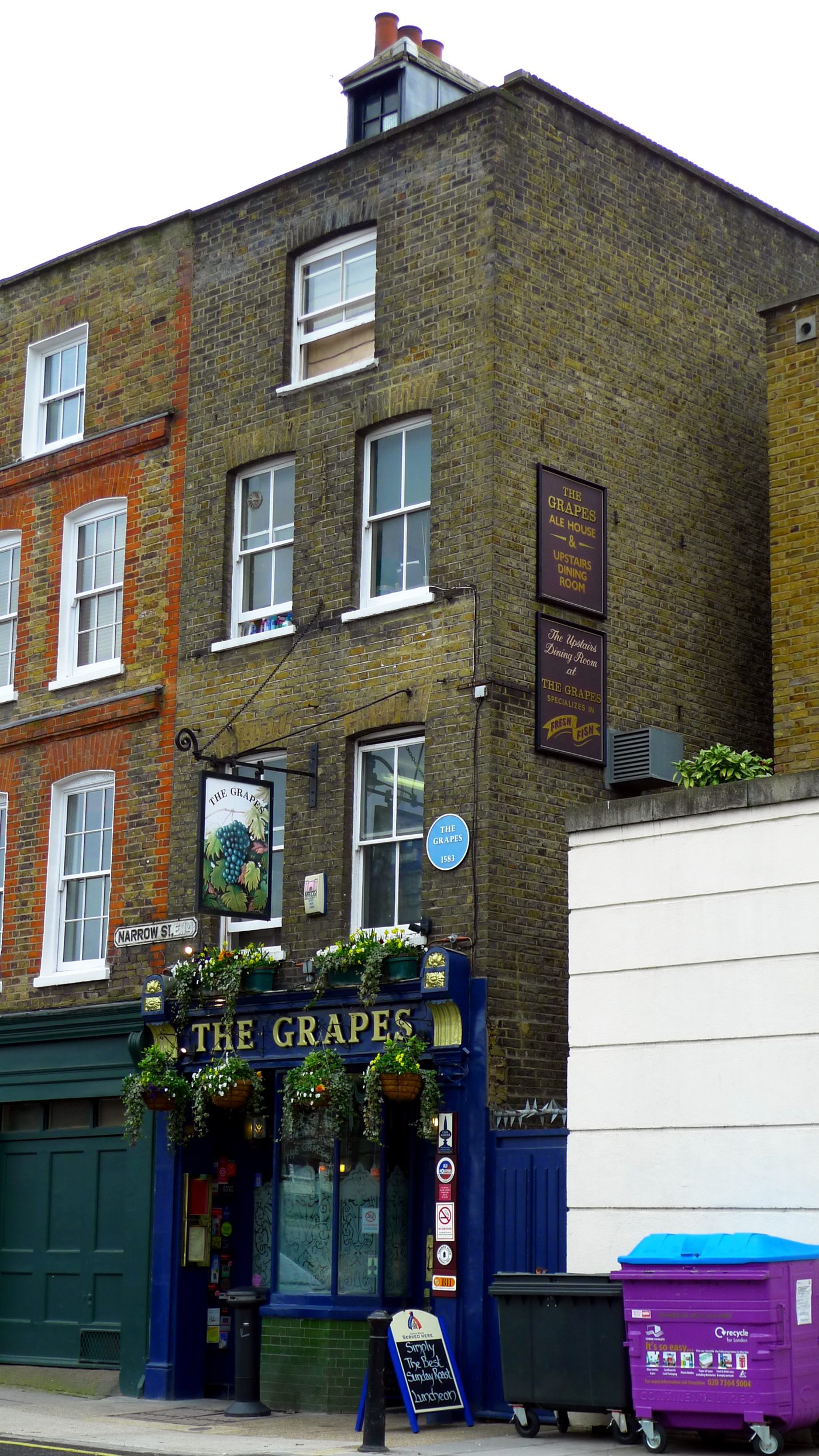
The Grapes
London, United KingdomOne room wide, with a veranda over the Thames, no straight floor, and a real claim to be the tavern Dickens wrote into Our Mutual Friend.
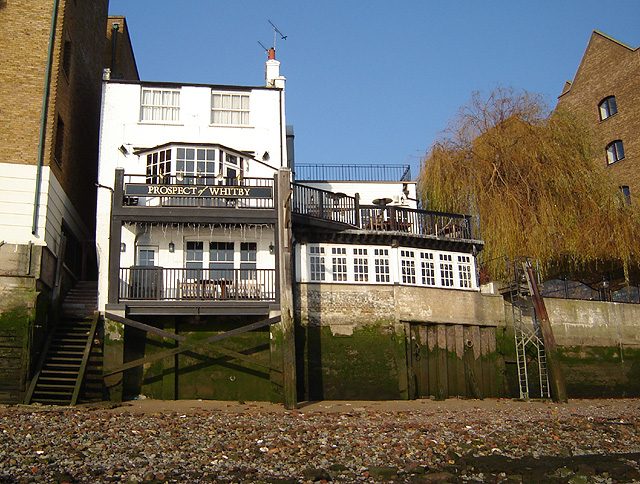
The Prospect of Whitby
London, United KingdomClaims 1520 and the title of oldest riverside tavern. The building is a 1777 rebuild, and the date seems to have been invented in the 1950s.